Texas Windshield Laws Every Leander Driver Should Know
The rules changed recently. Here is what Texas law actually says in 2026 about a cracked windshield, tickets, inspections, and your right to choose your own shop.
Call (737) 843-0004Texas Windshield Laws — the Short Answer
Texas windshield laws only ban a crack if it obstructs the driver’s view (Texas Transportation Code Chapter 547) — there is no statute against a cracked windshield by itself. As of January 1, 2025, House Bill 3297 eliminated the annual safety inspection for non-commercial passenger vehicles statewide, so a cracked windshield can no longer fail a Texas inspection, because that inspection no longer exists for personal vehicles. Your insurer also cannot force you to use a specific glass shop — Texas law protects your right to choose your own.
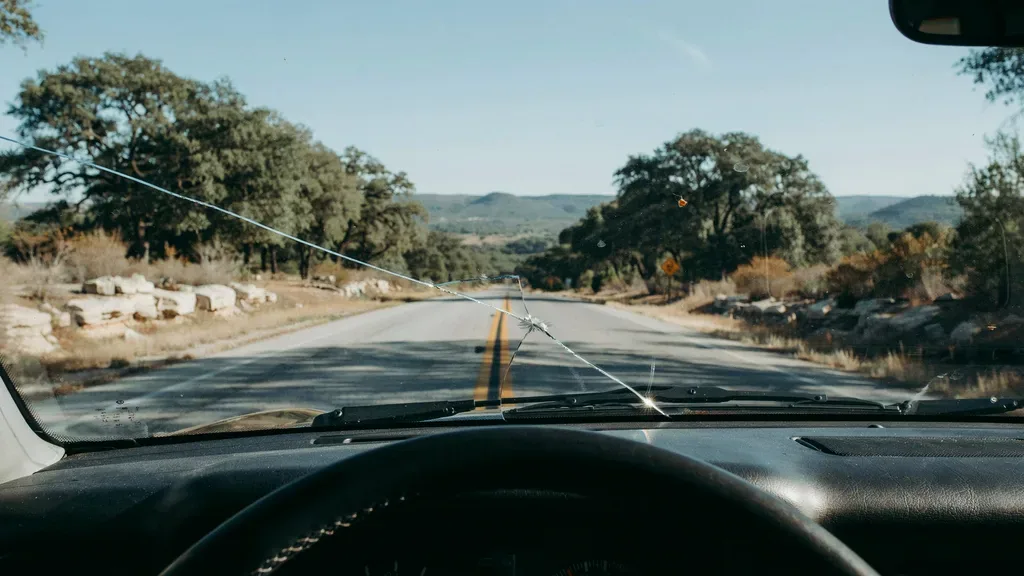
Is it illegal to drive with a cracked windshield in Texas?
There is no Texas statute that bans a cracked windshield outright. What the law prohibits is anything that obstructs the driver’s clear view. Under the Texas Transportation Code, an officer can cite you if a crack, chip, or sticker sits in your field of vision and interferes with a clear view of the road.
In practice that means a small chip low in the corner is unlikely to draw a ticket, but a crack running across the driver’s side of the glass can. A cracked windshield can also give an officer probable cause for a stop, and if the crack is in your sightline, a citation can follow.
The practical test an officer applies is simple: does the damage sit where it blocks the driver’s view of the road? Damage in the driver’s line of sight is the risk. Damage in a lower corner usually is not.
Will a cracked windshield fail a Texas inspection?
This is where most online advice is now out of date. As of January 1, 2025, Texas eliminated the annual safety inspection for non-commercial passenger vehicles. For a personal car or truck, there is no longer a safety inspection that a cracked windshield could fail.
What remains: Williamson County is part of the Central Texas emissions program, so most Leander vehicles still need an annual emissions test at registration. An emissions test checks your engine and exhaust systems — it does not inspect your windshield. Commercial vehicles are a separate case and still require safety inspection.
So the honest 2026 answer is: a cracked windshield will not fail a passenger-vehicle inspection, because that inspection no longer exists. The real risk is a traffic stop for obstructed view, not a failed inspection.
Because the rules changed in 2025, confirm the current requirement for your specific vehicle and county before you rely on it. This is general information, not legal advice.
House Bill 3297 — What Actually Changed in Texas Windshield Law
Most of the confusion around Texas windshield laws traces back to one change: House Bill 3297, passed by the 88th Texas Legislature, eliminated the annual vehicle safety inspection for non-commercial passenger vehicles statewide, effective January 1, 2025. Before that date, a windshield crack in the wrong spot could fail a Texas inspection outright. After that date, there is no passenger-vehicle safety inspection left to fail.
| Before Jan 1, 2025 | 2026, today | |
|---|---|---|
| Annual safety inspection | Required for most passenger vehicles | Eliminated statewide for non-commercial vehicles |
| Cracked windshield at inspection | Could fail the inspection if in the wiper-swept or sightline area | No safety inspection exists to fail |
| Emissions testing | Required in Williamson County | Still required in Williamson County — unaffected by HB 3297 |
| Obstructed-view traffic law | Texas Transportation Code Ch. 547 in effect | Unchanged — still in effect |
| Commercial vehicles | Safety inspection required | Still required — HB 3297 applies to non-commercial vehicles only |
The practical effect for Leander drivers: the legal exposure moved entirely from an annual paperwork event to an everyday traffic-stop risk. A crack that would once have quietly failed you at inspection time now sits on your windshield every single drive, and it’s the obstructed-view statute in Texas Transportation Code Chapter 547 — not an inspection sticker — that determines whether it’s a problem. That statute hasn’t changed and won’t be repealed by HB 3297; only the annual inspection requirement was eliminated.
Where the Damage Sits Matters More Than How Big It Is
Texas windshield laws don’t set a crack-length limit. The obstructed-view standard is about location, not size, which is why two drivers with similarly sized damage can face very different risk.
| Location | Traffic-stop risk | Why |
|---|---|---|
| Driver’s direct line of sight | High | Directly obstructs the view the statute protects |
| Anywhere in the wiper-swept area | Moderate | Crosses your field of view during normal driving |
| Edge-to-edge crack, any location | Moderate to high | Signals structural compromise, not just a vision issue |
| Passenger side, outside sightline | Low | Doesn’t obstruct the driver’s view |
| Lower corner, small chip | Low | Below the practical line of sight |
Officers apply judgment here, not a ruler. A star break the size of a coin dead center in your sightline is a real risk. A similarly sized chip tucked in the bottom corner usually isn’t. When in doubt, get it assessed — a $75 chip repair resolves the legal question and the structural one at the same time.
The insurance side of this is separate from the legal side. Comprehensive coverage handles windshield claims the same way it handles hail and theft, and the Texas Department of Insurance consumer guide to auto insurance confirms your right to choose your own repair shop regardless of what a carrier’s preferred-vendor list suggests. See how auto glass insurance claims work for the full walkthrough.
Texas law: you choose your own glass shop
Texas has long protected your right to select the repair shop of your choice. Your insurance company can recommend a preferred or network vendor, but it cannot require you to use one, and it cannot refuse to pay a covered claim because you picked your own licensed shop.
If an adjuster tells you that you have to use Safelite or a specific network shop, that is steering, and you do not have to accept it. Pick the shop you want, and your carrier still pays the covered amount. We work directly with every major carrier and bill them for the covered portion.
Frequently asked questions
Cracked windshield in Leander?
Tell us your vehicle and we confirm your coverage on the phone. Most drivers with full coverage pay nothing out of pocket.